
Speaking & Media
I speak and engage publicly on trauma, PTSD, brain science, and psychological injury for a wide range of audiences, from professional and clinical communities to corporate, organizational, and public-facing settings. My work often focuses on how these issues intersect with systems that shape real-world outcomes, including healthcare, law, and professional practice.
Drawing on clinical psychology and neuroscience, I am known for translating complex material with clarity and rigor, whether speaking to mental health clinicians, interdisciplinary professionals, leadership teams, or general audiences, without oversimplification or loss of nuance.
Focus Areas
Speaking engagements and media contributions often address topics such as trauma and PTSD across clinical, legal, and institutional contexts, the neurobiology of stress and recovery, psychological injury that is minimized or misunderstood, and the gap between diagnosis and functional impact.
I frequently address how trauma-related harm shows up in clinical work and beyond the therapy room, shaping symptom presentation, treatment response, and long-term functioning, particularly in systems that are not designed to recognize or accommodate trauma.
Audiences and Contexts
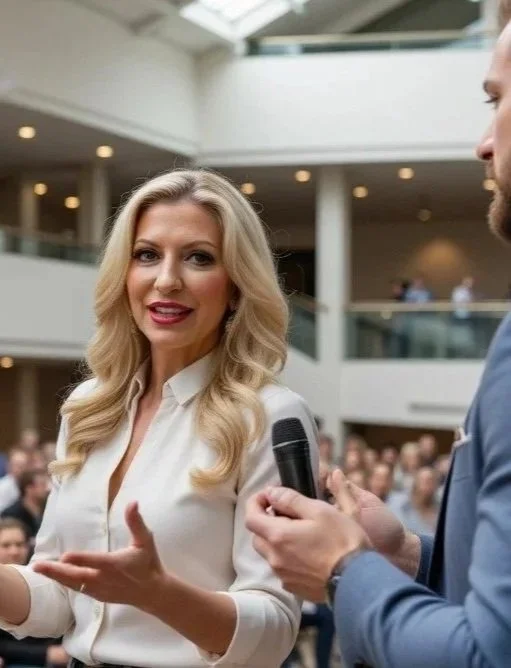
My work has been featured in national media, including a featured episode of Women in Power, and as a forensic psychology expert in the 2023 television docuseries Amityville: An Origin Story, where I provided psychological analysis of the 1974 DeFeo family murders. I am also a scheduled 2026 speaker for TEDxBU (Boston University), where I will address how contemporary understanding of PTSD can inform how we conceptualize and work with emotional responses in everyday life.
In addition to keynote and invited speaking, I have trained thousands of mental health clinicians. My training and teaching span multiple evidence-informed trauma therapies, including EMDR, Prolonged Exposure, Cognitive Processing Therapy, EMDR 3.0: Neural Desensitization and Integration Training, and related approaches.
Media Engagement
I participate in media conversations related to trauma, psychological injury, and brain science when careful interpretation, nuance, and contextual accuracy are essential. Media work is approached with the same standards of responsibility, role clarity, and evidence-based reasoning that guide my clinical, forensic, and educational work.
Topics often involve the public understanding of trauma and PTSD, the impact of psychological injury beyond diagnostic labels, and the translation of complex science for non-clinical audiences without distortion or oversimplification.